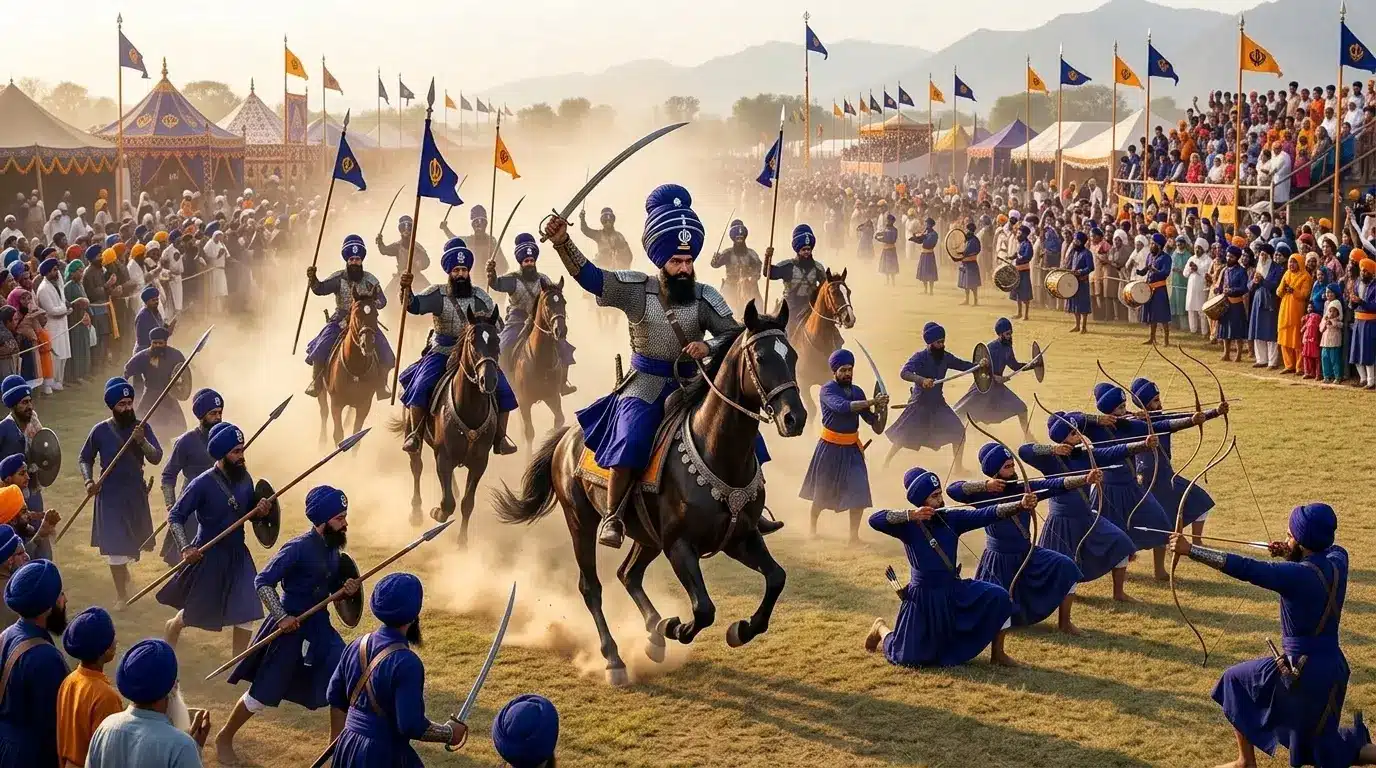
Vaisakhi is one of the major festivals celebrated in Punjab. While some festivals relate to religion, some to seasons, and others to culture, Vaisakhi was originally a cultural festival of the Punjabis. However, with the creation of the Khalsa Panth on this day, it became a religious festival. In this month, crops ripen and take on a new form; in the same way, Guru Gobind Singh Ji, by creating the Khalsa Panth, gave a new identity and spirit to Sikhi.
In this note, we will try to understand Vaisakhi as a festival of renewal.
Beginning of Vaisakhi fair among Sikhs:
Vaisakhi fairs had always been celebrated in Punjab for a long time, but among Sikhs, its significance is linked to Guru Amar Das Ji. According to Principal Satbir Singh, by the time of Guru Amar Das Ji, Sikhi had spread far and wide. A devoted Sikh, Bhai Paro Julka Ji, humbly requested Guru Sahib that there should be a specific day in the year when all Sikhs could gather at one place to have them blessed with Guru Sahib’s Darshan (divine sight).
ਹੋ ਦੀਨ ਦਇਆਲ ਜੋ ਆਗਿਆ ਹੋਇ । ਬਰਖ ਮਾਹ ਗਦਨ ਕਹੀਏ ਜੋਇ ।
O compassionate Guru Ji, with your permission a day should be designated in
the year.
Sarab Sikh gur darshan awai. Gur dars partap bhav par paravai.
All Sikhs should come to have the divine sight of You, and by having it, they will attain liberation through Your grace.
In this way, the tradition of Vaisakhi gatherings began. Every year on Vaisakhi, Sikhs would come together and receive Guru Sahib’s blessings, which also strengthened unity and mutual connection among them.
Creation of the Khalsa Panth
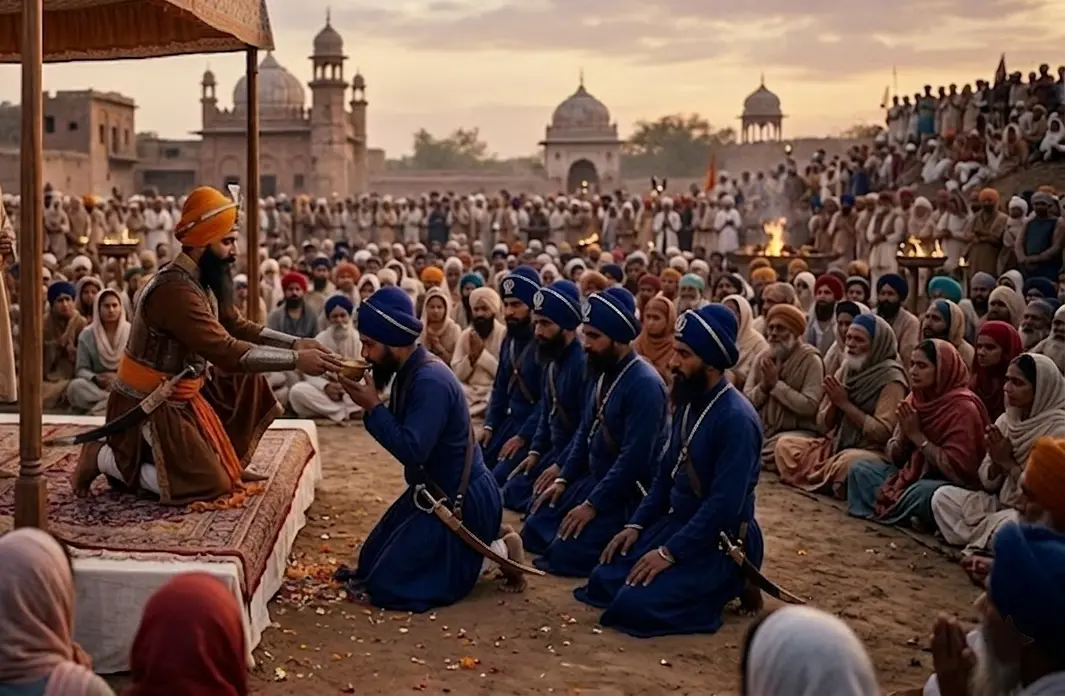
Vaisakhi gatherings had already started during Guru Amar das Ji’s time. The decision of Guru Gobind Singh Ji to create the Khalsa Panth on this very day made it even more significant. Guru Sahib sent Hukamnamas (letters of command) to the entire Sangat, telling them to gather on Vaisakhi of 1699, where the Khalsa was revealed.
This was, in essence, a renewal of the Sikh community. Khalsa was given a distinct and unique identity in every aspect. By administering Amrit and bestowing the Five Ks, Guru Sahib granted Sikhs a visible and unique form and identity. Thus, Vaisakhi became a festival of renewal for Sikhs.
Guru Sahib also established and reinforced the Sikh code of conduct (Rehat Maryada), giving Sikhs the honour of being distinct in the world.
By creating the Khalsa Panth, Guru Sahib blessed Sikhs with a unique identity. At the same time, he also made it clear that Sikhs must always remain distinct. As long as Sikhs preserve this uniqueness, Guru Sahib will continue to bless them with strength:
jb lg ^wlsw rhy inAwrw ]
jab lag khhaalasaa rahe niaaraa ||
As long as the Khalsa remains distinct,
qb lg qyj dIau mYˆ swrw ]
tab lag tej dheeau mai(n) saaraa ||
will bestow all my power upon them.
jb ieh ghY ibprn kI rIq ]
jab ieh gahai biparan kee reet ||
But if they adopt the ways of others,
mYˆ n kroˆ ien kI pRqIq ]
main na karo in kee parteet ।।
I will not place my trust in them.
The Khalsa of Guru Sahib is not distinct in just one aspect but in every dimension. A careful study of Sikh history shows that in warfare, martyrdom, way of life, and conduct, the Khalsa has always maintained standards different from the world. This distinct identity is essential and it is the very essence of Sikhi.
Even today, we must understand Sikhi principles and apply them in our lives so that this uniqueness continues to shine in every Sikh.