India is a land of festivals. Numerous celebrations are observed here, associated with religion, culture, and the changing seasons. Among them, Holi is widely celebrated across the country. However, when Guru Gobind Singh established the Khalsa Panth in 1699, he not only gave the Sikh community a distinct identity but also reshaped the way festivals were observed. By transforming existing traditions and giving them new meaning, he emphasised the uniqueness of the Khalsa. Hola Mohalla is one such festival that reflects this distinctiveness.
This article seeks to highlight the origin, uniqueness, and contemporary significance of Hola Mohalla.
Literal Meaning of Hola Mohalla
Guru Gobind Singh Ji desired to train the Khalsa in the art of warfare and physical discipline. To achieve this, he created a new festival to coincide with Holi and named it Hola Mohalla. Unlike the colourful revelry traditionally associated with Holi, this festival was linked to martial training and preparedness.
According to Bhai Kahn Singh Nabha and Bhai Vir Singh, the term “Hola Mohalla” signifies a military charge, a mock battle, or a place of attack. Thus, from its very meaning, the festival conveys the spirit of courage, discipline, and readiness.
Origin of Hola Mohalla
Hola Mohalla, a symbol of bravery and Chardi Kala (high spirits and resilient optimism), was initiated in 1700 at Anandpur Sahib by Guru Gobind Singh Ji. The tradition began near Gurdwara Qila Holgarh Sahib.
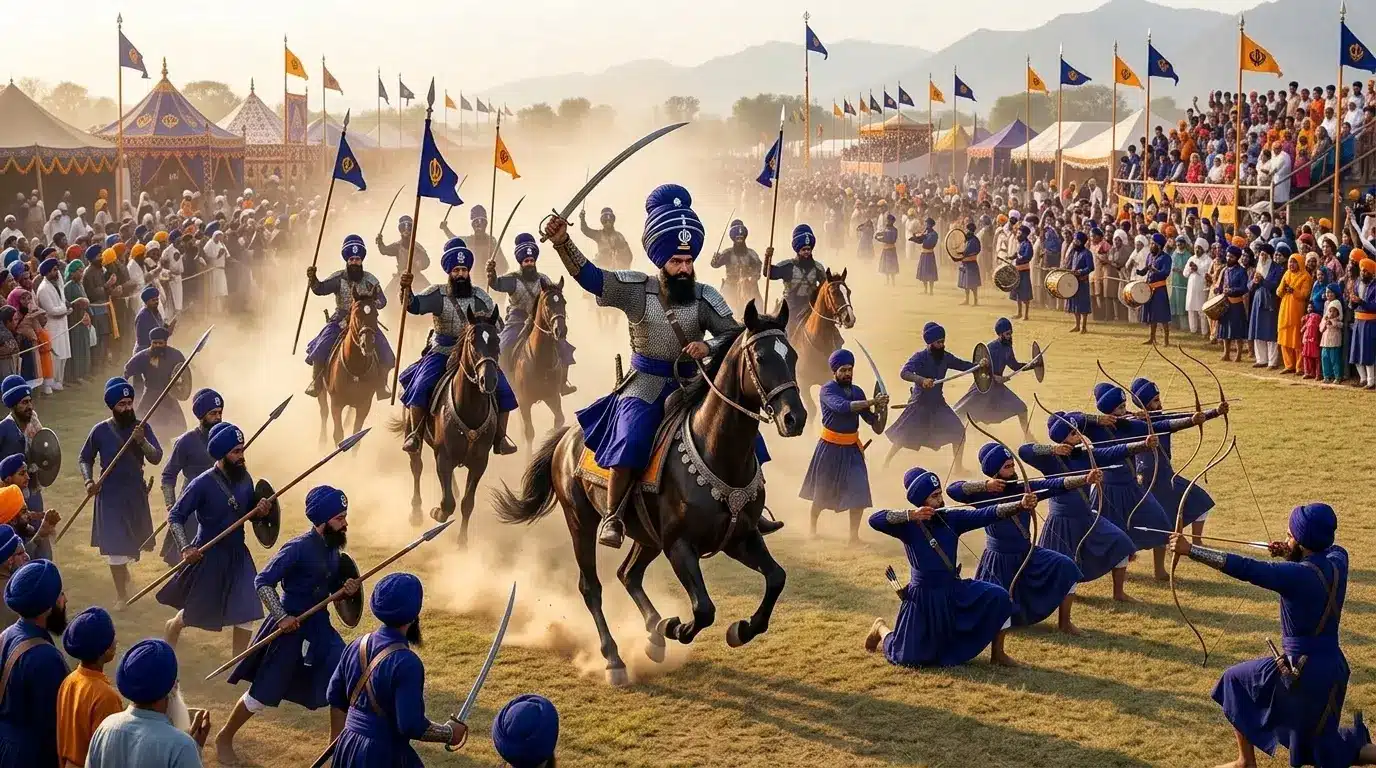
The primary objective of the festival was to provide practical military training to the Sikhs through mock battles. Guru Sahib divided the Sikhs into two groups – one dressed in white and the other in saffron attire. Both groups were instructed to capture the fort. When one group succeeded, the other would attempt to reclaim it. Guru Sahib observed these mock battles with great interest, rewarding the victorious group with a siropa and guiding both sides regarding their mistakes and improvements.
In this way, the festival became a living classroom of martial skill, discipline, and strategic awareness.
Spiritual Perspective
Just as the Khalsa is distinct in language, attire, appearance, and customs, Guru Sahib also granted it a unique character in the observance of festivals. During the spring season, when many celebrate Holi with colours and festivity, Guru Sahib infused the occasion with spiritual depth.
In Gurbani, he explains the true meaning of Holi:
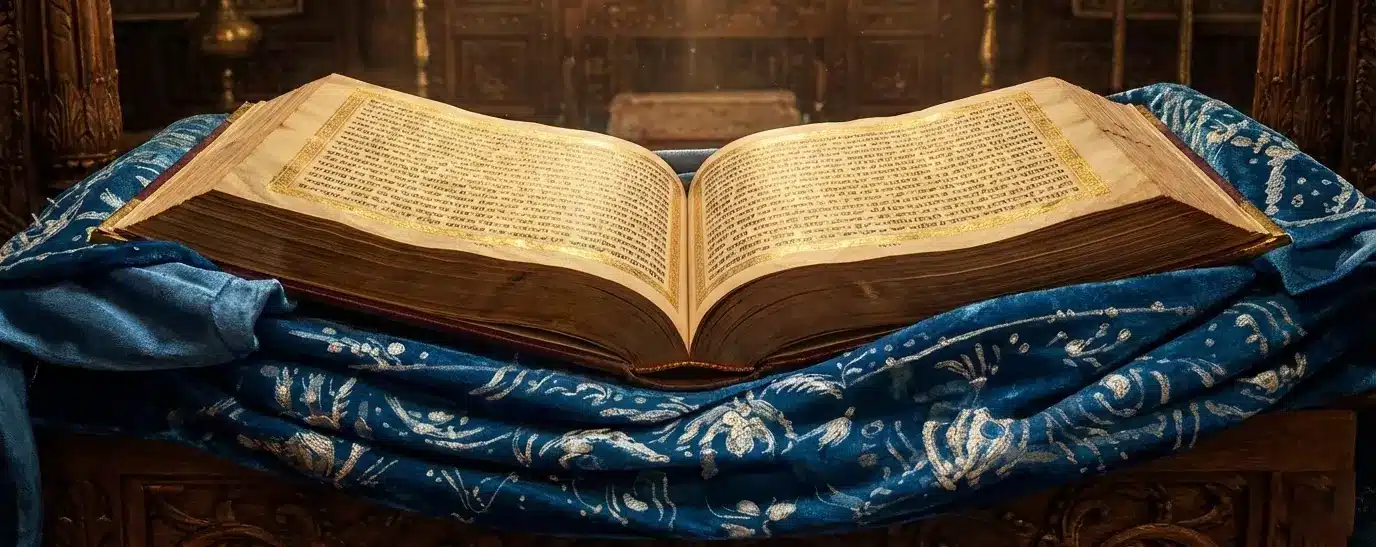
ਹੋਲੀ ਕੀਨੀ ਸੰਤ ਸੇਵ।।
I celebrate Holi by serving the saints;
ਰੰਗੁ ਲਾਗਾ ਅਤਤ ਲਾਲ ਦੇਵ।।
I am imbued with the deep crimson colour of God’s Divine Love.”
Through this teaching, Guru Sahib emphasised that true celebration lies not in outward colours but in devotion, service, and immersion in the love of the Divine. Thus, Hola Mohalla carries both martial vigour and spiritual elevation.
Hola Mohalla in the Present Times
According to Dr Rattan Singh Jaggi, in earlier times Hola Mohalla was celebrated over seven days; today it is generally observed over three days. The principal celebrations take place at Anandpur Sahib.
On the third day, the Nihang Singh groups conduct a grand procession known as the “Mahalla.” It begins from Gurdwara Qila Anandgarh Sahib and proceeds via various historical Gurdwaras, including Gurdwara Mata Jito Ji & Gurdwara Qila Holgarh Sahib etc, before reaching an open ground where martial displays are performed. The procession concludes at Takht Sri Kesgarh Sahib, where the festival formally comes to an end.
The celebrations feature Gatka (traditional Sikh martial arts), horse-riding, mock combat demonstrations, kirtan, katha, and large-scale community kitchens (langar), drawing thousands of devotees from around the world.
Conclusion
In summary, Hola Mohalla is a traditional Sikh festival that embodies both spiritual and temporal strength. By transforming Holi into Hola Mohalla, Guru Gobind Singh Ji established a tradition that strengthens the Sikh community internally and externally.
Gurbani fortifies the mind against inner weaknesses, while martial training prepares the body to confront external challenges. This harmonious balance of spirituality and strength reflects the ideal of the Khalsa.
Hola Mohalla, a divine gift of Guru Gobind Singh Ji, continues to inspire Sikhs to cultivate courage, discipline, resilience, and Chardi Kala. It stands as a proud symbol of Sikh bravery and ever-rising spirit.